Pityriasis alba is a harmless, noncontagious skin condition that most often causes pale, slightly scaly patches on a child’s face. It can look alarming when surrounding skin tans, but it usually fades on its own. The useful next step is not to guess from color alone: notice the patch’s edges, scale, location, and history, then seek medical advice if the pattern is not clear.
What pityriasis alba looks like on a child’s skin
Against the surrounding skin, the patches look lighter, with blurry rather than sharply drawn edges. Often round or oval, they may be flat patches or thin raised areas. Fine scale can be present, especially early on. Patches range from 0.5 to 5 centimeters across, and a child usually has one to 20 patches.
The patches are most common on the cheeks or chin, followed by the arms, neck, and shoulders. In about half of affected children, patches are limited to the face. Usually, itching is mild or absent. At first, the condition may look like a mildly pink, scaly area; as inflammation settles, it becomes a pale hypopigmented patch. Later, the color remains lighter even after the scale has gone.
Why pityriasis alba happens and who gets it
Its exact cause is unknown, and no infectious organism has been identified. It is considered a mild manifestation of atopic dermatitis, a type of eczema. Most affected children have a personal or family history of atopy, such as atopic dermatitis, allergic rhinitis, or asthma. For people with this tendency, dry skin is an important contributing factor.
Pityriasis alba mostly affects children and adolescents. The usual age range is 3 to 16, and 90% of cases occur before age 12. It occurs in all skin types, although contrast can be more noticeable and diagnosis more frequent in darker skin. Boys and girls are affected at about the same rate.
After sun exposure, affected skin does not tan normally while nearby skin darkens. Because of that contrast, pale patches may seem more obvious in summer. In winter, dry indoor air can make dryness and scale more noticeable.
How a clinician tells it from vitiligo, tinea, and other patches
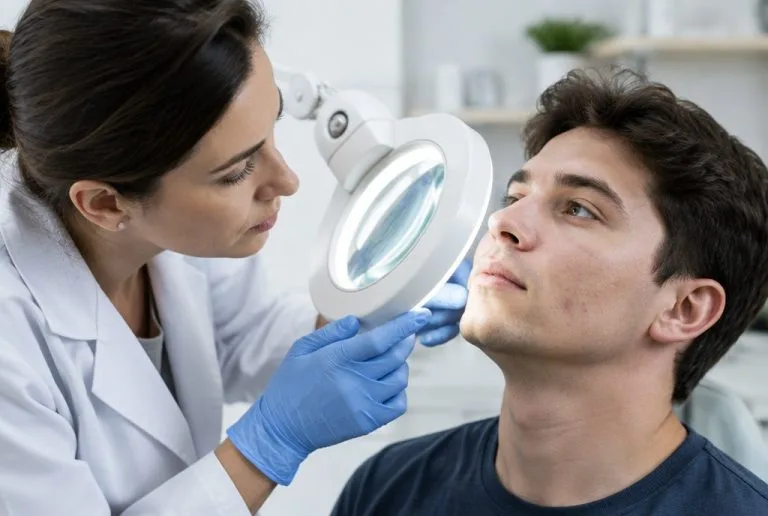
From the pattern and distribution of the patches, a clinician usually diagnoses pityriasis alba without tests. When the appearance is uncertain, an examination can rule out look-alikes. Rarely, a skin biopsy is needed.
| Condition | Clues that may help distinguish it |
|---|---|
| Pityriasis alba | Ill-defined pale patches with fine scale, often on the face; itch is minimal or absent. |
| Vitiligo | Sharply defined, fully depigmented milky-white patches without scale. Under a Wood’s lamp, they appear bright white with distinct borders. |
| Tinea versicolor | Fine, bran-like scale, often on the trunk. A potassium hydroxide test can identify fungal hyphae, which are not found in pityriasis alba. |
| Post-inflammatory hypopigmentation | Lightening that follows contact dermatitis, psoriasis, or another inflammatory skin problem. |
| Pityriasis rosea | Often starts with one herald patch, followed by a symmetric pink or red rash on the trunk—not primarily white patches. |
Under a Wood’s lamp, pityriasis alba is only subtly lighter. Dermoscopy can show poorly defined light areas, a pale pigment network, and superficial white scale. These details are useful to a clinician, not a reason to self-diagnose from a home light.
How to manage pityriasis alba and make patches less noticeable
Without treatment, most cases improve and the skin’s color returns. The patches can last from months to several years, although most resolve within a year. Even after the rash improves, repigmentation itself may take months. During childhood, patches may come and go, but they generally clear by adulthood and do not leave permanent skin changes.
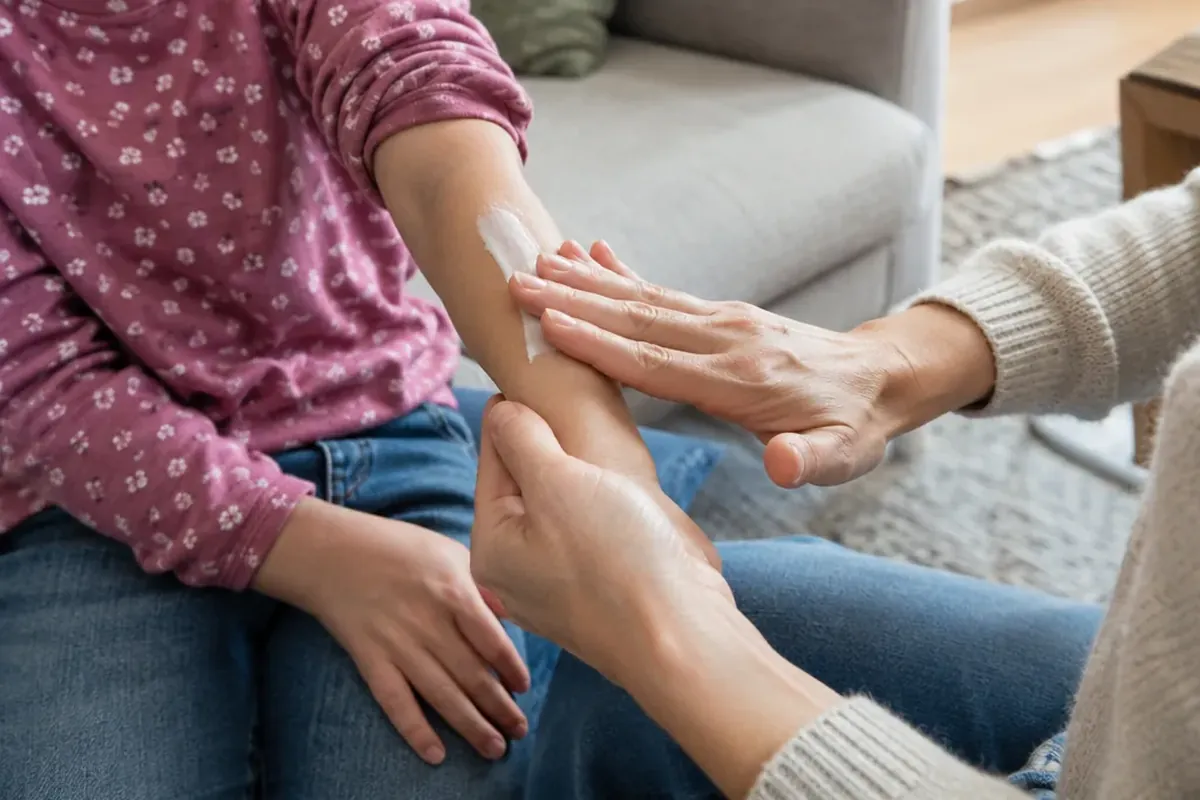
- Moisturize every day. A mild moisturizer or emollient can reduce dryness and scaling.
- Reduce contrast from the sun. Broad-spectrum sunscreen with at least SPF 30 helps keep surrounding skin from darkening and making patches stand out. Protective clothing and a wide-brimmed hat add protection.
- Ask before using a medicated cream. A clinician may recommend a low-potency topical steroid cream, such as 1% hydrocortisone, to ease redness or itch and speed repigmentation. Avoid contact with the eyes when treating the face.
A clinician may also consider topical calcineurin inhibitors or calcitriol, and for extensive cases phototherapy or a 308-nm excimer laser.
What can and cannot prevent new pale patches
Because the cause is not known, there is no proven way to prevent pityriasis alba. Still, regular gentle skin care can support the skin barrier: use a mild moisturizer and limit drying conditions when possible. With protection from extreme cold and dry heated air, scale may be reduced.
By limiting tanning of the surrounding skin, sunscreen does not cure the condition but can make the difference in color less dramatic.
Common myths about pale, scaly patches
“It is contagious.”
No. Pityriasis alba does not spread from person to person. Its exact cause is unknown, and it is not an infection passed through contact.
“Every white patch is vitiligo.”
No. Although vitiligo is one possible cause of a white patch, its borders are sharply defined and it does not scale. By contrast, pityriasis alba is usually less sharply outlined and may have fine scale.
“A tan will hide it.”
Usually the opposite happens. As unaffected skin tans, the pale areas can become more conspicuous.
“Pityriasis alba and pityriasis rosea are the same.”
They are different conditions. Pityriasis rosea commonly produces a pink or red trunk rash and usually resolves in 6 to 8 weeks. It is not a sexually transmitted disease and is not contagious.
When a doctor should look at a child’s light patches
When a new or changing patch has an uncertain cause, see a doctor or dermatology professional, particularly if it is sharply white, widespread, present from birth, follows another rash, or does not fit the usual pattern of mildly scaly facial patches. In person, an assessment can distinguish pityriasis alba from vitiligo, tinea versicolor, a stable birthmark-like depigmented patch, or post-inflammatory hypopigmentation.
Frequently Asked Questions
How can I get rid of pityriasis alba?
You usually do not need to eliminate it: it often resolves on its own. Daily moisturizer can reduce dryness and scale, while sunscreen can reduce the contrast. A clinician may advise a low-potency topical steroid for redness or itch.
What causes small white patches on my skin?
Pityriasis alba is one cause, but so are vitiligo, tinea versicolor, post-inflammatory hypopigmentation, and other conditions. Color alone cannot identify the cause, so a clinician should assess patches that are new, unusual, or changing.
What does pityriasis alba look like?
It usually looks like a pale, poorly defined round or oval patch with fine scale, often on a child’s face. The patch may begin slightly pink and scaly before becoming lighter.
How is pityriasis alba diagnosed?
Diagnosis is usually clinical, based on the patch’s appearance and distribution. If there is doubt, a Wood’s lamp, dermoscopy, or a test to exclude a fungal infection may help; a biopsy is rarely needed.
Who is most likely to get pityriasis alba?
It is most common in children and adolescents, especially ages 3 to 16, and is often associated with an atopic background such as eczema, allergic rhinitis, or asthma. It affects all skin types.
Can an STD cause pityriasis rosea?
No. Pityriasis rosea is not a sexually transmitted disease, is not contagious, and is separate from pityriasis alba.