Fordyce spots are common, harmless visible oil glands that can look like tiny pale bumps on the lips, inside the cheeks, or genital skin. They are not HPV, herpes, or another sexually transmitted infection. Because their appearance can overlap with other bumps, a persistent or concerning change is worth having evaluated by a clinician.
Fordyce spots are visible oil glands, not an infection
Fordyce spots, also known as Fordyce granules, are ectopic sebaceous glands: oil glands in a place where they are easier to see. Unlike typical sebaceous glands, they do not have an associated hair follicle. Their ducts open directly onto the surface of the skin or mucosa.
They are a normal anatomical variation, not a disease and not cancer. In fact, they are extremely common: an estimated 70% to 80% of adults have them. The glands are present from birth, but hormone changes at puberty can enlarge them and make them more visible. That helps explain why someone may first notice small bumps in adolescence or adulthood.
The exact cause is not fully understood. One leading explanation is that these glands are positioned differently during embryonic development. Whatever the cause, Fordyce spots are harmless and do not spread through kissing, skin-to-skin contact, or sex.
Where Fordyce spots show up and what they look like
The appearance of Fordyce spots is usually a small, slightly raised papule measuring about 1 to 3 millimeters, though some can reach 5 millimeters. They may be white or yellowish, skin-colored, or occasionally pale red on genital skin. You may see one spot or a cluster; clusters can contain many individual lesions. On the lips and inside the cheeks, they are often symmetrical on both sides.
Common locations include the border of the lips, especially the upper lip, and the inner cheeks. On the genitalia, they can occur on the penile shaft, glans, scrotum, or labia. On a penis, they may stand out more when the foreskin is stretched or during an erection. That change in visibility does not mean the bumps are contagious or growing.
Tiny bumps on the lips often have a simple explanation
Fordyce spots commonly occur on the lips, and the upper lip is the most frequent lip site. In one report of lip cases, the upper lip was involved in about 75% of cases. Still, not every white bump on a lip is a Fordyce spot. A clinician can assess a persistent or changing bump in person.
How Fordyce spots differ from herpes, warts, and similar bumps
Location and color alone cannot confirm a skin condition. The pattern can be useful, but it is not a substitute for an examination—especially for new genital bumps. This comparison highlights why Fordyce spots are often confused with other conditions.
| Finding | Typical pattern |
|---|---|
| Fordyce spots | Small whitish-yellow or skin-colored bumps; scattered or clustered; harmless and noncontagious. |
| Herpes | Painful blister-like lesions that can ulcerate or form scabs. |
| Genital warts | May have a cauliflower-like surface and can enlarge over time; may also occur around the anus. |
| Milia | Firm, white, dome-shaped superficial keratin cysts, usually 1 to 2 millimeters. |
| Pearly penile papules | A single or double row of dome-shaped bumps around the corona of the glans, rather than scattered across the shaft. |
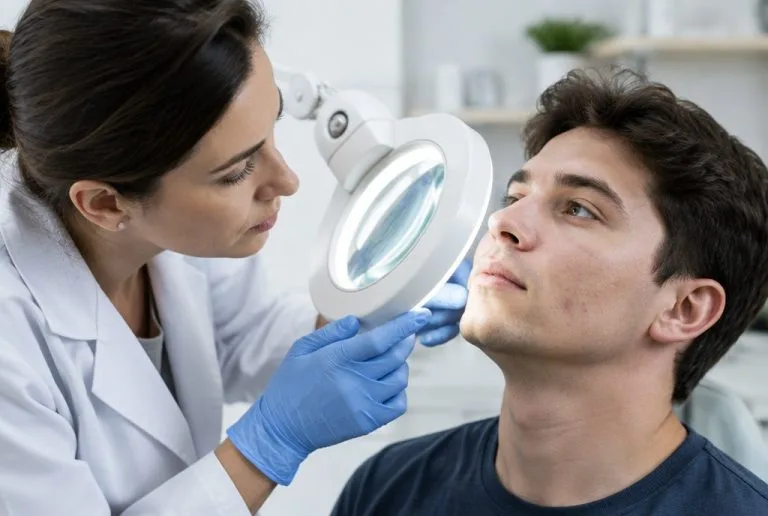
A dermatologist can often distinguish these findings by clinical examination; a biopsy is rarely needed for Fordyce spots. Dermatology evaluation is particularly useful when the bumps are genital, because herpes and genital warts require a different care plan.
Common myths about Fordyce spots
Myth: They are an STI or HPV
Fordyce spots are not caused by HPV, herpes, or any other sexually transmitted infection. They are not infectious and cannot be passed to a partner.
Myth: They need to be removed
They do not require treatment for health reasons. Reassurance is the only care most people need. Some people seek treatment because of cosmetic concerns, but that is a personal choice rather than a medical necessity.
Myth: Popping them solves the problem
Squeezing may express thick sebum from a spot, but it does not make the gland go away. Popping or squeezing can irritate the area and may lead to inflammation, infection, or scarring.
Myth: They will definitely disappear on their own
Sources do not fully agree: one source says they usually fade over time, while much of the medical literature describes them as persisting throughout life. Their noticeability can vary with age and hormones. There is no known way to prevent Fordyce spots, which occur naturally.
Fordyce spots treatment is optional, and should start with a conversation
When their appearance is distressing, discuss the treatment of Fordyce spots with a dermatologist. No approach is necessary for health, and a procedure should be chosen only after the diagnosis and the trade-offs are clear. Available treatment options described in dermatology include the following:
- Topical tretinoin: This retinoid cream may reduce or eliminate visible spots through exfoliation. Reported results may take 2 to 6 weeks of daily use.
- CO2 laser: Laser ablation is among the most studied approaches. Reports describe complete re-epithelialization in about two weeks; a pinhole CO2 laser technique is intended to reduce thermal damage and downtime.
- Micro-punch surgery: A pen-like instrument removes individual spots. Healing can take up to one month.
- Electrodessication or cryotherapy: Electrodessication uses a low-level electric current, with reported healing in 3 to 5 days. Cryotherapy freezes tissue; mild pain after the procedure may last about three days.
- Other specialist approaches: Acid cautery, insulated microneedle radiofrequency, and photodynamic therapy have been reported. Photodynamic therapy may cause burning, blistering, or post-inflammatory darkening of the skin.
Oral isotretinoin has produced rapid clearing in a report, but recurrence after stopping it is common. That makes it a decision for a qualified clinician, not a home remedy.
Why home removal is more likely to irritate than help
Do not try to pop, squeeze, or scrape Fordyce spots at home. The visible material is sebum, but removing it does not remove the underlying gland. Scraping can cause scarring.
Some home remedies have been discussed, including diluted apple cider vinegar and oils such as argan or jojoba oil. The reported benefits are anecdotal or not medically proven. A gentle cleanser and moisturizer may minimize how noticeable the spots look. Avoiding heavy, oily products on the affected area may help keep them from enlarging, but it will not prevent the normal glands from existing.
When a dermatologist should examine the bumps
Make an appointment with a dermatologist for any new bumps on the genitals, especially if you are unsure whether they could be herpes or warts. You should also seek medical advice if bumps itch, cause discomfort during sex, or create significant cosmetic distress. Fordyce spots are usually painless, so symptoms such as painful blisters, ulcers, or scabs point away from the typical pattern.
An in-person dermatology examination can distinguish Fordyce spots from milia, cysts, and other skin conditions. That confirmation can be valuable even when no treatment is needed: it replaces uncertainty with a clear explanation and helps you avoid unnecessary self-treatment.
Frequently Asked Questions
Are Fordyce spots HPV?
No. Fordyce spots are not HPV, are not caused by HPV, and are not sexually transmitted. They are visible sebaceous glands.
Can tretinoin cream be used for Fordyce spots?
Topical tretinoin may reduce or eliminate visible spots through exfoliation, with reported results in 2 to 6 weeks of daily application. Ask a clinician whether it is appropriate for the location you want to treat.
Are Fordyce spots contagious?
No. They cannot be transmitted through kissing, skin contact, or sex.
Can I safely pop Fordyce spots?
No. Squeezing may release sebum but will not remove the spot, and it can cause irritation, inflammation, infection, or scarring.
What should I do if I have tiny bumps on my lips?
Fordyce spots are a common explanation, particularly on the upper lip, but a clinician should assess a persistent, changing, or concerning bump rather than relying on appearance alone.
Do Fordyce spots go away on their own?
The evidence is mixed. They may become less noticeable over time, but they are often described as lifelong. They do not need treatment unless you want to discuss cosmetic options with a dermatologist.