Hand eczema is an inflammatory skin condition on the hands that can itch, burn, crack, blister, or become thick and scaly. It is not one single diagnosis: the pattern may reflect repeated wet work, an allergy, an atopic tendency, or more than one of these at once.
Hand eczema is a pattern, not one diagnosis
Dermatitis literally means inflammation of the skin. In medical language, eczema and dermatitis are synonyms, although “eczema” is often used in everyday speech to mean atopic dermatitis. During an acute episode, skin can become red, swollen, itchy, and weepy, sometimes with blisters. Over time, chronic dermatitis may bring scaling, thickened skin, and painful fissures.
Chronic hand eczema means eczema on the hands that lasts longer than three months, or returns at least twice within 12 months after clearing completely between episodes. Fissures can make ordinary movements painful and put individuals at risk of long-term sick leave or job loss.
In clinic, both cause and appearance are described. By cause, the pattern may be irritant contact dermatitis, allergic contact dermatitis, protein contact dermatitis/contact urticaria, or atopic hand eczema. By appearance, it may be hyperkeratotic palmar eczema, recurrent vesicular eczema, nummular eczema, or fingertip eczema. In practice, mixed forms are common.
The clues on your hands can point to different types
| Pattern | What it can look or feel like |
|---|---|
| Irritant contact dermatitis | Repeated exposure to water, soap, or detergent gradually damages the skin barrier. |
| Allergic contact dermatitis | A delayed allergic reaction after repeated exposure to an allergen; identifying it often requires patch testing. |
| Dyshidrotic eczema | Small, deep 1–2 mm fluid-filled blisters on the palm, fingers, or soles; it is often itchy, recurrent, and symmetric, then scales as it resolves over two to three weeks. |
| Fingertip dermatitis | Fingertip eczema, also called pulpitis, is concentrated on the finger pads and can cause painful fissures. The pulpitis sicca form often worsens in winter. |
| Nummular eczema | Coin-shaped, intensely itchy plaques on the backs of the hands; allergic contact dermatitis may be present underneath. |
Despite its name, dyshidrotic eczema is not caused by blocked or malfunctioning sweat glands. That older explanation has been disproven. Distribution offers practical clues: chopping garlic can affect the thumb, index, and middle finger of the non-dominant hand, while handling certain plants can affect the dominant hand of a florist.
Symptoms can go beyond dry, itchy hands
Common symptoms of hand eczema include dryness, redness, scaling, intense itching, burning, roughness, swelling, and painful cracks, especially at the fingertips and knuckles. Moving the hands or fingers can cause pain from hot or tender skin, blisters, or cracks. In chronic cases, the skin can become thickened, and nail ridging, pitting, or dystrophy can occur.
About one in three people with chronic hand eczema also has eczema on the feet.
Everyday exposure can trigger a flare-up
Hand eczema develops through a combination of individual susceptibility and exposure. Atopic dermatitis is the strongest risk factor for chronic hand eczema, and mutations in the filaggrin gene impair the skin barrier. Exogenous irritants include repeated contact with water, soaps, shampoos, cleaning chemicals, solvents, citrus fruit, onions, garlic, raw meat juices, and friction.
Wet work is the single most important occupational risk factor. It is defined as having hands in water for at least two hours a day, washing hands more than 20 times a day, or wearing occlusive gloves for at least two hours a day. Healthcare workers, hairdressers, cleaners, food handlers, mechanics, construction workers, bakers, florists, and agricultural workers frequently face these exposures.
Allergic contact dermatitis involves a delayed hypersensitivity reaction that can take weeks or years of repeated contact to develop. Common allergens include nickel, fragrances, rubber accelerators in gloves, chromate, hair dye ingredients, and acrylates in nail cosmetics. Emotional stress is a reported trigger for dyshidrotic eczema flares, and smoking may worsen long-term outlook.
How hand eczema is diagnosed
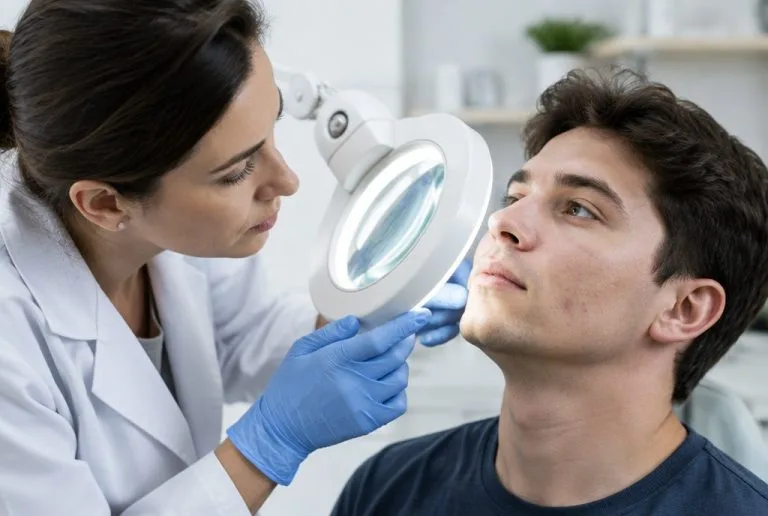
A clinician diagnoses hand eczema through a medical history and skin examination, assessing whether the course is acute, relapsing, or chronic, alongside any past skin disease, dermatitis elsewhere, and occupational or hobby exposures.
Patch testing should be considered for persistent disease, treatment failure, or suspected contact allergy. It checks for delayed allergic reactions using about 50 standard allergens applied to the back for 48 hours, typically involving an application visit, a 48-hour reading, and a final reading on day five to seven. When necessary, a skin biopsy helps rule out conditions like psoriasis or fungal infections, and a bacterial culture can check for secondary infection.
Treatment works best as a ladder, not a single cream
First-line care combines emollients, skin protection, and avoidance of irritants and allergens, which should continue even when the skin looks normal. During flares, topical corticosteroids form the foundation of treatment; because palm skin is thick, mild 1% hydrocortisone is often insufficient and potent or very potent topical steroids are typically needed.
Topical calcineurin inhibitors are short-term second-line options for patients who do not respond to or cannot tolerate topical corticosteroids, though they are approved specifically for atopic dermatitis. For moderate to severe chronic disease, phototherapy and systemic treatment options may be considered.
When using a prescribed topical steroid and an emollient, leave at least 20 minutes between applications to prevent diluting the steroid. Creams are generally preferred during the day, while ointments are more effective overnight.
Protect your hands with a routine you can repeat
- Use a soap substitute rather than soap for washing, then pat hands dry instead of rubbing.
- Apply an emollient immediately after drying and whenever skin feels dry, keeping a supply at home and work.
- Wear PVC or nitrile gloves rather than rubber or latex for wet work, adding cotton liners underneath if worn longer than 10–20 minutes.
- Turn reusable gloves inside out after use, rinse with warm water, dry completely, and discard any with holes. Remove rings before wet work.
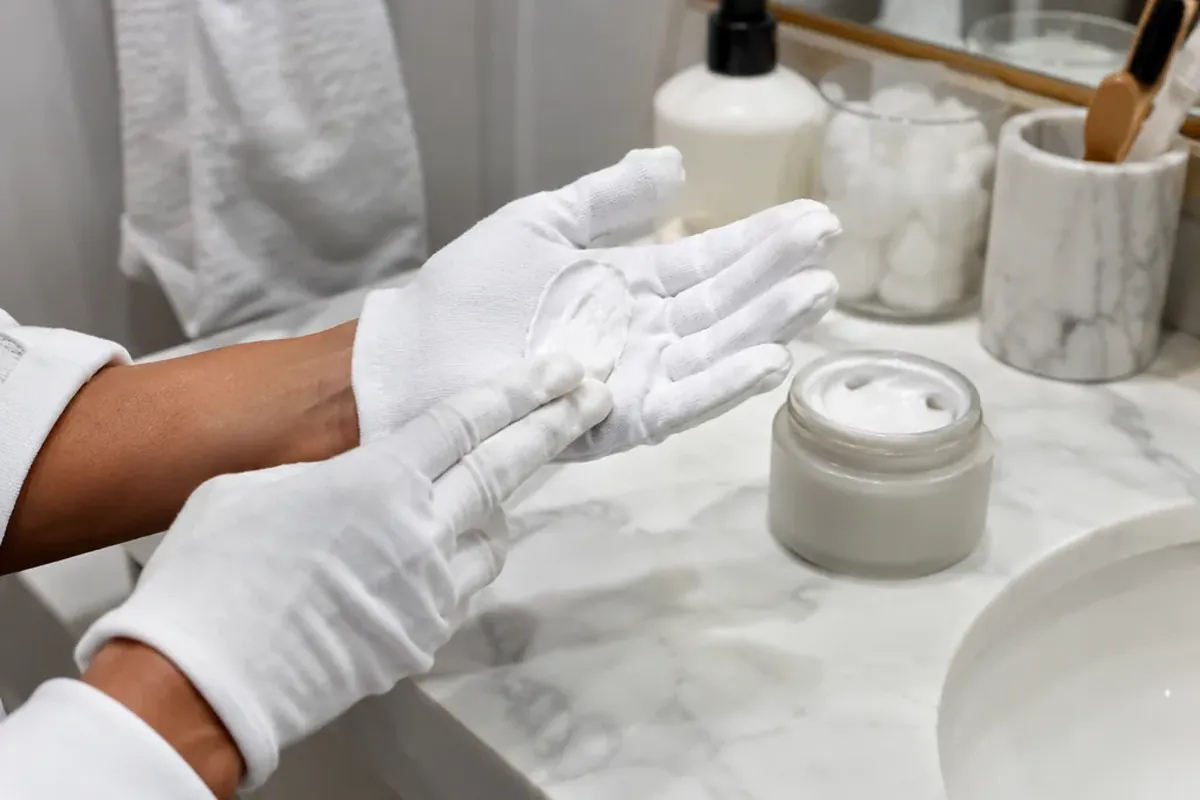
- Wear cotton gloves over emollient at night to enhance absorption and protect bedding. Use a clean spoon rather than fingers to take product from a tub.
When selecting moisturizers, avoid products containing fragrance, dyes, and preservatives, which can trigger allergic contact dermatitis.
Common assumptions can keep eczema on the hands going
“If my hands look better, I can stop moisturizing.”
The skin remains vulnerable long after redness and cracks fade, with tiny fissures taking at least eight weeks to heal after the surface appears normal. Protective measures and emollients should continue for at least four to six months after eczema settles.
“More washing is always safer.”
Frequent washing with water and soap breaks down the protective barrier. When hands are not visibly dirty, alcohol hand rubs are less irritating than soap, and emollient-based cleansers should be used instead of standard soap.
“All glove materials protect sensitive skin equally.”
Rubber and latex gloves can cause contact allergy, and wearing occlusive gloves traps sweat. PVC or nitrile gloves are preferred for wet work, paired with cotton liners whenever gloves remain on for more than 10 to 20 minutes.
When a doctor should examine your hands
See a doctor if hand eczema does not improve after two weeks of treatment, or if the skin becomes increasingly red, swollen, warm, or painful, which can signal a secondary bacterial infection. Seek urgent medical attention if the skin is blistered, crusty, leaking fluid, has pus-filled spots, or is accompanied by fever, as these may indicate severe infection or eczema herpeticum.
A dermatologist should be consulted when hand eczema is severe, fails primary care, significantly impairs sleep, work, or quality of life, or requires patch testing for suspected contact allergy.
Frequently Asked Questions
What is dermatitis?
Dermatitis is inflammation of the skin. Eczema is the medical synonym, although people often use eczema to refer specifically to atopic dermatitis.
What is chronic eczema?
Chronic hand eczema is eczema on the hands that lasts longer than three months or recurs at least twice within 12 months after clearing completely between episodes.
What causes hand eczema and what can trigger flare-ups?
It develops from a combination of individual susceptibility, such as an atopic tendency or filaggrin gene mutations, and exposure to irritants like water, soap, and chemicals, or allergens like nickel and rubber accelerators. Wet work is a major occupational trigger.
What is fingertip dermatitis?
Fingertip dermatitis is a form of hand eczema localized to the finger pads, often marked by painful fissures. The pulpitis sicca form typically worsens in winter.
How can eczema be treated at home?
Apply emollients regularly and immediately after washing, protect hands with suitable gloves during wet work, use soap substitutes, and avoid known irritants and allergens.
What is dyshidrotic eczema?
It is a recurrent, often symmetric form of eczema characterized by small, deep, itchy fluid-filled blisters on the palms, fingers, and soles that typically resolve with scaling over two to three weeks.