If the soles of your feet have clusters of small pits, about 1–3 mm wide, and a strong odor that comes back even after you wash and change socks, the likely explanation is pitted keratolysis. It is a superficial bacterial skin infection limited to the outermost layer of the skin. It is not contagious, and with topical treatment it usually clears in two to four weeks. It also comes back often. In one group of soldiers, nearly two in three had a recurrence within a month. Whether it returns depends mostly on one factor: sweat.
What Pitted Keratolysis Is and Why Your Soles Have Small Holes
Pitted keratolysis (PK) is a bacterial infection of the stratum corneum. This is the tough, dead outer layer of the skin, made largely of the protein keratin. The bacteria break down this layer and leave crater-like pits behind. These are the “small holes” many people notice on the bottom of their feet. The infection stays in that outer layer and does not go deeper.
It almost always affects the pressure-bearing parts of the soles: the ball of the foot, the heel, and the pads under the toes. In rare cases it appears on the palms. You may also see it called keratolysis plantare sulcatum, keratolysis sulcata, or ringed keratolysis. Doctors first described it in the early 20th century as a feature of yaws, a different tropical infection. It was recognized as its own condition in the 1930s.
Causes of Pitted Keratolysis: How Bacteria and Sweat Carve Pits
PK is caused by bacteria that already live on your skin, not by germs you pick up from someone else. The usual culprits are gram-positive bacteria, mainly Corynebacterium species, Kytococcus sedentarius, Dermatophilus congolensis, Actinomyces, and Streptomyces species. Normally they cause no trouble. In a warm, moist environment they multiply.
The process works like this:
- Moisture builds up. Excessive sweating (hyperhidrosis), tight shoes, and socks that trap heat keep the skin damp for hours.
- Bacteria thrive. Prolonged exposure to moisture lets the normal skin bacteria overgrow.
- Enzymes break down keratin. The bacteria release protein-digesting enzymes called proteases that break down the stratum corneum. Kytococcus sedentarius, for example, produces two of these, known as protease P1 and P2.
- Pits form and odor develops. Each spot where the outer skin has been broken down becomes a pit. At the same time, the bacteria release sulfur compounds (thiols, sulfides, and thioesters), and keratin breakdown produces butyric acid. Together these cause the typical unpleasant foot odor.
That chemistry explains why the smell is so persistent. Washing removes some bacteria from the surface, but the source of the odor stays in the damaged skin until the infection is treated.
Symptoms of Pitted Keratolysis: What You See, Smell and Feel
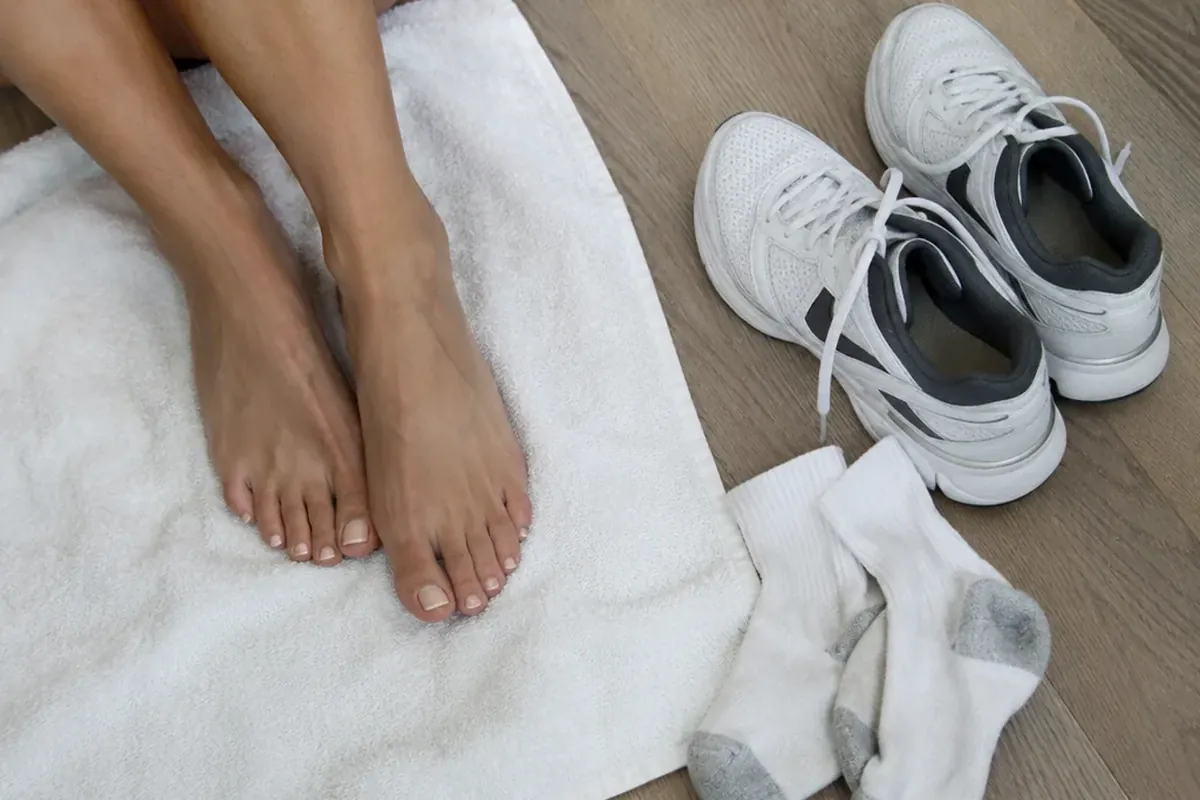
The key sign is many shallow, crater-like pits, 1–3 mm across, in the thick skin of the soles. Pits can merge into larger shallow erosions up to about 7 mm. Left untreated, they can join into large crater-like areas. The skin around the pits may look white or soggy, a change called maceration that comes from staying wet. The pits are easiest to see when your feet are wet, such as after a shower or a sweaty day.
Two studies show what people with PK typically notice:
| Symptom | 53 patients (Takama et al., 1997) | 133 Korean soldiers |
|---|---|---|
| Excessive sweating of the feet | 100% | 98.5% |
| Bad odor | 88.7% | 95.5% |
| Slimy or slippery feeling skin | 69.8% | 38.3% |
| Burning | — | 23.3% |
| Itching | — | 18.8% |
| Tingling | — | 13.5% |
Apart from the odor, PK often causes no physical discomfort. When it does, people describe itching, burning, or soreness while walking. A rare form shows up as painful plaques with red to purple bumps.
PK can also appear alongside two other skin infections caused by related bacteria: erythrasma, typically in skin folds such as the groin, and trichomycosis axillaris, which affects underarm hair. Doctors call this combination the corynebacterial triad. In one study of South Korean soldiers, 13% of those with PK had all three. It is often missed, so if you have PK, it is reasonable to ask your doctor to check your armpits and groin as well.
When to see a doctor: Make an appointment if you notice pits on your soles, if foot odor persists despite good foot hygiene, or if walking becomes painful. A professional exam matters because several other conditions can also cause small holes in the skin of the soles.
Who Is Most at Risk for Pitted Keratolysis?
PK can occur at any age, but it is most common between ages 21 and 30. Between 80% and 96% of people with PK are between 10 and 40. Men are affected about four times as often as women, likely because they more often wear occlusive footwear (closed shoes that don’t let air through) and may have less consistent foot hygiene.
Risk factors include:
- Hyperhidrosis (excessive sweating)
- Occlusive footwear such as rubber boots or vinyl shoes
- Thickened skin on the soles (keratoderma)
- Diabetes, obesity, or a weakened immune system
- Hot, humid climates
- Poor foot hygiene
- Barefoot training on warm, damp surfaces, as in judo on tatami mats
Studies show how much the setting matters:
| Group studied | People with PK |
|---|---|
| US soldiers in South Vietnam (387 volunteers) | 53% |
| Rice paddy workers in South India (341) | 42.5% |
| Korean coal miners (283) | 23.3% |
| German athletes (184) | 13.5% |
| Korean soldiers (842) | 12.8% |
| Korean industrial workers (4,325) | 1.5% |
The pattern is consistent. Rates are highest where feet stay hot and wet for long periods, as with boots in tropical heat or standing in flooded fields, and much lower among workers whose feet stay drier.
Diagnosing Pitted Keratolysis and Telling It Apart From Athlete’s Foot
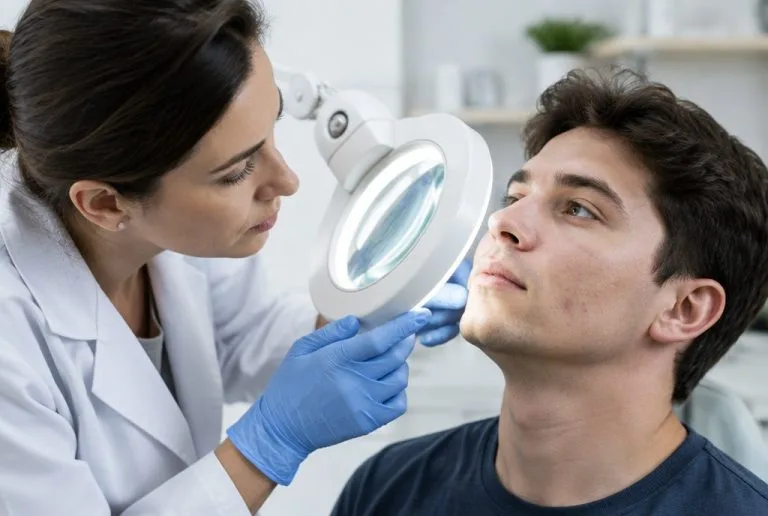
A doctor can usually diagnose PK just by looking at your feet. The pattern of pits on the pressure areas and the typical odor are usually enough, so tests are rarely needed. Other tools help when the picture is unclear:
- Dermoscopy: A handheld magnifier with a light shows many pits with sharply defined walls, and sometimes visible bacterial colonies. In one study, 89.2% of patients showed interrupted skin ridges, meaning the normal ridge lines of the sole were broken up by pits.
- Wood’s lamp: Under ultraviolet light, infection with Corynebacterium may glow coral red, but Kytococcus sedentarius does not. A negative result therefore does not rule out PK.
- Skin scraping (KOH test): A small sample of skin is checked under a microscope to rule out athlete’s foot (tinea pedis).
- Biopsy: Used only when the diagnosis is uncertain. Under the microscope, the pits are confined to the stratum corneum.
The main difference between pitted keratolysis and athlete’s foot is the cause. PK is a bacterial infection, while athlete’s foot is a fungal infection, so they need different treatments. That is why the skin scraping matters. Other conditions a doctor may consider include plantar warts, punctate palmoplantar keratoderma, and basal cell nevus syndrome, also known as Gorlin syndrome.
How to Treat Pitted Keratolysis and How Long It Takes
Pitted keratolysis treatment has two goals: clear the bacteria and reduce the moisture they depend on. Treating only the bacteria makes it more likely the infection will return.
| Treatment | Role | What the evidence shows |
|---|---|---|
| Topical antibiotics: clindamycin, erythromycin, fusidic acid, or mupirocin | First-line treatment | Applied twice daily for 2–4 weeks |
| Benzoyl peroxide 2.5% or 5% | Kills bacteria and softens thickened skin; used alone or with an antibiotic | A randomized trial found no significant difference from clindamycin. Another trial found 2.5% and 5% about equally effective (69% vs. 64% response). |
| Clindamycin 1% + benzoyl peroxide 5% gel | Combination option originally developed for acne | A documented treatment option |
| Oral antibiotics: erythromycin or clarithromycin for at least 10 days; tetracyclines as an alternative | Only for cases that don’t respond to topical treatment | No evidence they work on their own. They probably don’t reach effective levels in the outer skin of the soles. |
| Aluminum chloride 20% antiperspirant | Reduces sweating | Works best applied in the evening, when sweat glands are less active |
| Botulinum toxin injections or iontophoresis | For severe sweating that doesn’t respond to other treatment | Used to control hyperhidrosis |
Combining treatments that target bacteria and sweat can work quickly. In one case series, a patient who used clindamycin 1% twice daily plus a 25% aluminum chlorohydrate antiperspirant improved clearly within two weeks. In the Dutch army, PK is usually treated with topical products plus non-drug measures, and oral medication is rarely prescribed.
Timeline: According to the Cleveland Clinic, symptoms should start improving 2–3 days after you begin antibiotic treatment. Most cases heal within 2–4 weeks. In one study of 44 patients, complete healing took an average of 2.6 weeks. WebMD gives a broader range of 1–8 weeks. If you see no improvement after one week, go back to your doctor. Untreated, PK can last for years, improving and flaring up again. The outlook with treatment is excellent, and the skin heals without scarring.
About home remedies: the Cleveland Clinic advises against applying bleach or apple cider vinegar to the skin. A diluted hydrogen peroxide foot soak, one part peroxide to three parts warm water, is an option it mentions.
How to Prevent Pitted Keratolysis From Coming Back
Recurrence of pitted keratolysis is common, especially in people who keep sweating heavily. In 133 Korean soldiers, 64.3% relapsed within a month, regardless of how large the lesions were or which treatment they received. In a study of 44 patients, 9.1% relapsed within three months, and every one of them had hyperhidrosis. Among 41 civilian patients in Turkey, 17% relapsed within a year. Keeping your feet clean and dry is the most important part of long-term foot care:
- Wash twice a day. Use soap or an antibacterial cleanser, then dry thoroughly, including between your toes.
- Choose cotton socks and change them daily. Wash them at 140°F (60°C) or hotter after each wear.
- Use absorbent insoles, such as charcoal insoles. Keep at least two pairs and alternate them daily.
- Rotate your shoes. Don’t wear the same pair two days in a row, so each pair can dry out completely.
- Apply antiperspirant to your soles regularly, for example 20% aluminum chloride, preferably in the evening.
- Let your feet breathe. Wear open shoes or sandals whenever the situation allows.
- Do not share footwear, towels, or washing items with others.
- Pick well-ventilated shoes that fit properly to reduce friction and rubbing.
If your work or sport requires boots or barefoot training on mats, these habits matter even more. Those are the settings with the highest recorded rates of PK.
Common Myths About Pitted Keratolysis
- “It’s athlete’s foot.” No. PK is caused by bacteria, and athlete’s foot by a fungus. A skin scraping can tell them apart.
- “You caught it from a locker room.” PK is not contagious. It develops when bacteria already on your skin overgrow in moisture.
- “Washing more will make the smell go away.” Washing helps prevent PK but doesn’t cure it. Odor that persists after washing and changing socks is one of the key signs of PK.
- “Pills work better than creams.” There’s no evidence that oral antibiotics work on their own. Topical treatment is the first choice.
- “Special socks will prevent it.” In a randomized, double-blind study, zinc oxide–coated socks were no better at preventing PK than regular socks.
- “Harsh household products will kill the bacteria.” The Cleveland Clinic advises against putting bleach or apple cider vinegar on your skin.
Frequently Asked Questions
What are the small holes on the bottom of my feet?
Clusters of shallow, 1–3 mm pits on the ball, heel, or toe pads, together with sweaty feet and strong odor, are typical of pitted keratolysis. Other conditions, such as plantar warts, punctate palmoplantar keratoderma, or Gorlin syndrome, can look similar, so have a doctor examine your feet to confirm the cause.
Is pitted keratolysis contagious?
No. It can’t spread from person to person. The bacteria involved normally live on everyone’s skin and cause infection only when they overgrow in warm, damp conditions.
How do you fix pitted keratolysis?
The usual approach is a topical antibiotic such as clindamycin, erythromycin, fusidic acid, or mupirocin, or benzoyl peroxide gel, applied twice daily for 2–4 weeks. This is combined with sweat control and keeping your feet dry. Oral antibiotics are reserved for cases that don’t respond to topical treatment.
How long does pitted keratolysis take to improve with treatment?
Symptoms often start improving within 2–3 days of starting antibiotic treatment, and most cases clear within 2–4 weeks. If nothing has changed after one week, see your doctor again.
What is the difference between pitted keratolysis and athlete’s foot?
Pitted keratolysis is a bacterial infection that causes small pits and odor in the thick skin of the soles. Athlete’s foot is a fungal infection. Because they need different treatments, doctors may take a skin scraping to rule out athlete’s foot.
Who is most likely to get pitted keratolysis?
Young adults, especially men, people with excessive sweating, and anyone who spends long hours in closed, airtight shoes or boots in hot, humid conditions. Soldiers, farmworkers, miners, and athletes who train barefoot on mats have shown high rates in studies.